Weekly · FL Post Wire
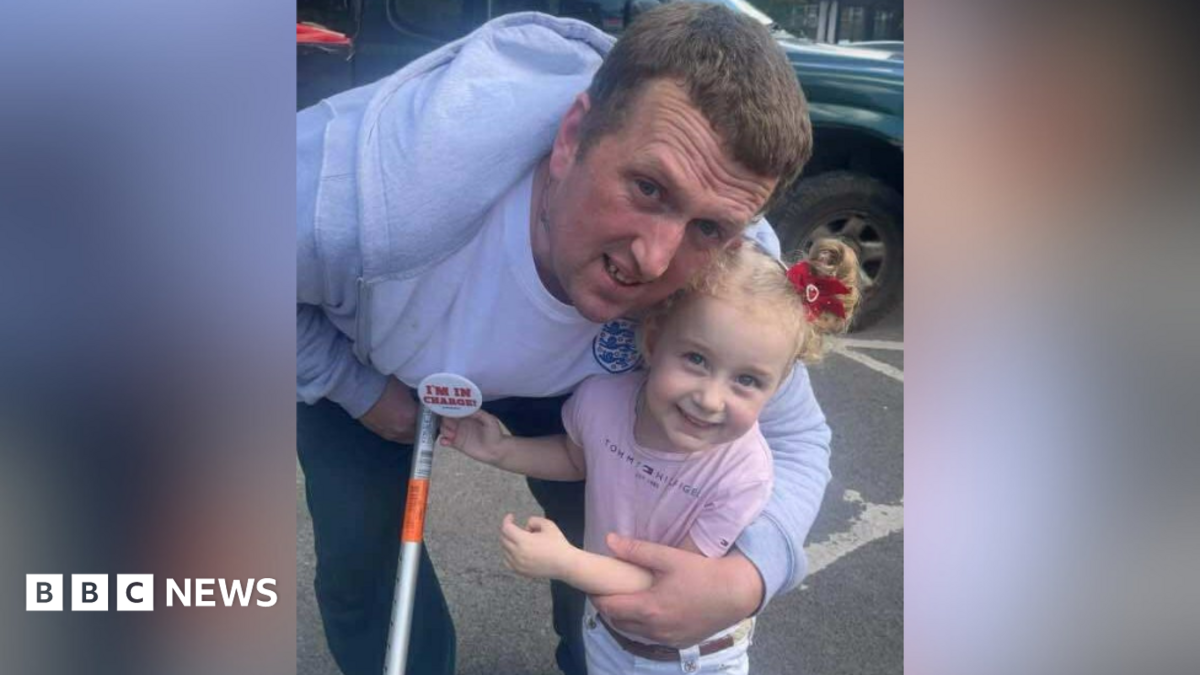
"The stroke didn't just change my body. It changed my mind, my confidence, my sense of who I was." Darren Dickenson from Headington, in Oxford, had just become a granddad in October 2024 when, at the age of 43, he suffered a stroke while at home. He was forced to undergo life-saving emergency surgery, before complications followed - leading to a lengthy recovery.
Dickenson and his wife Sophie are now sharing their story as part of a new campaign by The Stroke Association called Survival is Not Enough. "I was at work, it was a normal day and he had come home from a night shift, ready to get the children ready," Sophie said. "My daughter said, around about 10 o'clock, he was spinning in the kitchen with very split speech and acting very strange." Moments later, Darren collapsed after managing to get himself upstairs.
Sophie later found out this had been because he "felt he was gonna die in front of the children and he didn't wanna scare them". His daughter, then aged 16, instantly called an ambulance, which Sophie said "definitely" saved his life. "He wouldn't be here today if it wasn't for her," she said.
The stroke had come entirely out of the blue for a healthy and active man who worked five nights a week at a local supermarket. Darren was rushed to hospital, where initial thoughts that the incident could have been related to meningitis were shelved after a blood clot was found on the 43-year-old's brain. He had suffered a rare basal ganglia stroke with brainstem involvement.
"Life changes in just a second," Sophie said. "Your life is just shattered just by the word stroke - when you actually see the effects of it, the word is shattering." Darren spent nine weeks in hospital recovering from the stroke and its complications, which at times left his life hanging in the balance. He returned home to be cared for after declining a place in a long-term rehabilitation centre because "he just wanted to get home to his young family".
But him being back at home was not easy, Sophie said, with her husband unable to walk unaided or verbally communicate. "We were speaking through the Jabber, which is a text-type computer to enable communications," she said. "He learnt how to talk with the children and how to be at home again." Just over two years on from his stroke, Darren now lives with attention, memory and cognitive difficulties, can only walk short distances and still struggles to speak.
He is now looking to set up a stroke survivors group for people around his age, after he found that meeting others with similar experiences had been "the first time I felt truly understood" during his recovery. "When you see what you need to pull through for, then you pull through, and he's found his inner strength from the children," Sophie said. "It's a big change for the whole family, and the person from going from the breadwinner to the person that then needs help is a huge emotional rollercoaster.
"But there is hope and light at the end of the tunnel."
Source: BBC